
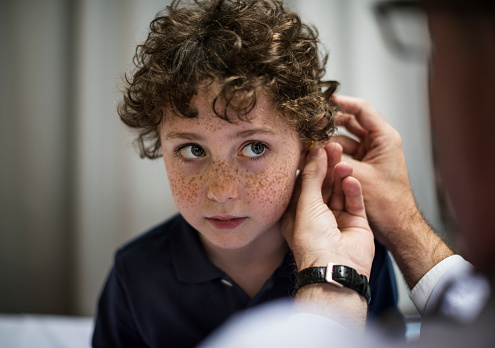
Amblyaudia correction by gain adjustment of remote microphone hearing aids
Principle Investigators: Dr William Keith (SoundSkills APD Clinic). Associate Investigators: Dr Deborah Moncrieff (University of Pittsburgh); Prof. Suzanne Purdy (University of Auckland.
Auditory processing disorder (APD) is an underlying cause of learning disorders in thousands of New Zealand children and arises from abnormalities in how the brain processes sound information. Amblyaudia, where one ear dominates input of sound information to the brain and suppresses the input from the other ear, occurs in about half of the children with APD and may underly the disorder, or be part of a broader range of processing issues.
The HRF funded a pilot study in 2016 to ascertain where amblyaudia could be corrected by the fitting of hearing aids. These would deliver changing sound levels to the dominant ear, where initially sound level is reduced, and then gradually increased over a period of weeks to match the sound level received by the non-dominant ear. This remote treatment is different to current strategies, where children must attend audiology clinics.
Initial results were encouraging and this study aims to more rigorously test the effectiveness of remote hearing aids for treatment of amblyaudia. It is hypothesised that this treatment strategy would improve treatment efficiency and reduce treatment costs for children who need both amblyaudia therapy and hearing aids for their APD.