
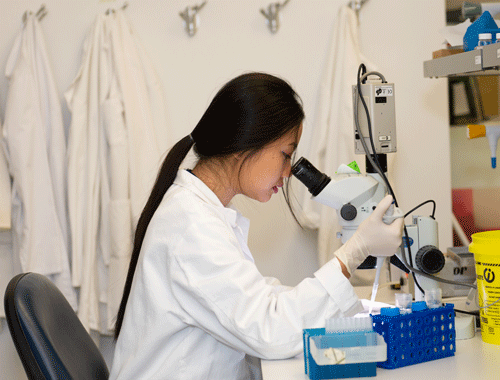
Building foundation for Pharmacological therapies of hearing loss: the role of adenosine receptiors in regeneration of afferent synapses in the cochlea after excitotoxic injury.
Principle Investigator: A/P Srdjan Vlajkovic (University of Auckland). Associate Investigators: Prof. Peter Thorne, Dr Shelly Lin (University of Auckland)
Sensorineural hearing loss describes the loss of the sensory receptor cells in the ear as well as the primary auditory neurons that carry sound information from the ear to the brain. This process is associated with noise exposure and aging and recent research suggests that extensive loss of connections between the neurons and the receptor cells is the earliest sign of cochlear damage, which leads to degeneration of the neurons. This impedes transmission of sound information to the brain and presents as complex auditory processing deficits such as difficulties discriminating speech in noisy environments.
Adenosine receptors mediate important neuroprotective signalling pathways and have been proposed as therapeutic targets in a variety of neurodegenerative conditions, including cochlear damage. This study will examine whether adenosine receptor signalling may prevent or repair the loss of connections between primary auditory neurons and the receptor cells in the cochlea. This information would improve our understanding of the molecular basis of sensorineural hearing loss and contribute to improved auditory outcomes for individuals with hearing loss.